Composting
Apartment composting bins: what actually works in a small kitchen
The best apartment compost setup is the one that keeps scraps out of the trash without creating a smell problem or stealing your only prep surface.
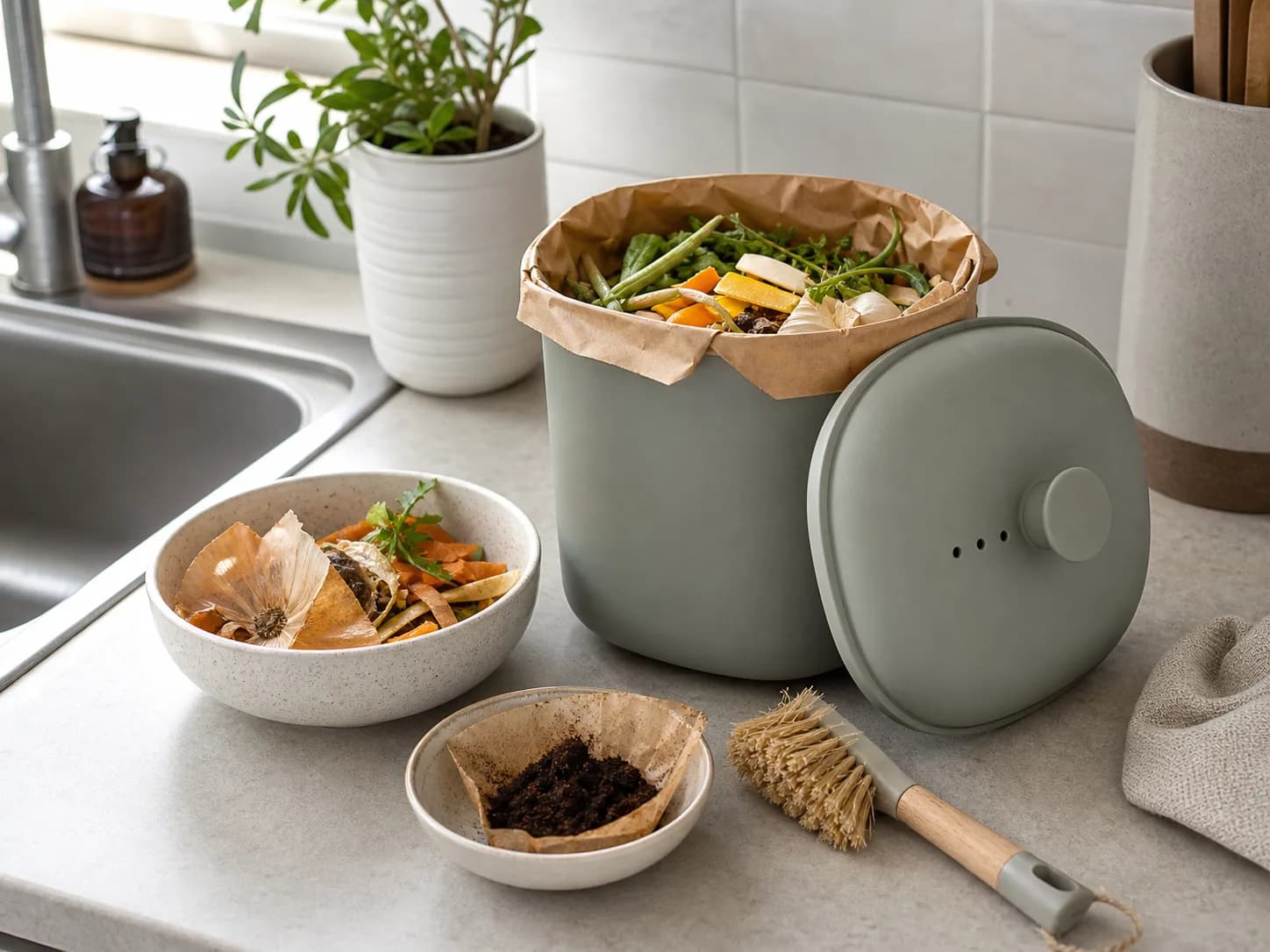
Quick takeaways
- A 1-gallon or smaller bin is enough for most apartments.
- Smell problems usually come from waiting too long, not from composting itself.
- Line the bin only if the liner makes cleanup easier than rinsing.
People often assume apartment composting requires a large system, a balcony, or a level of household discipline that normal renters do not have. In practice, the barrier is smaller: a bin that is too big, too leaky, or too awkward to empty on pickup day.
A compact counter or under-sink setup works well if you optimize for frequency of emptying instead of maximum capacity.
Related ecokit paths
- Grove Collaborative review (2026): pricing, subscriptions, and alternativesComparison page for pricing, format tradeoffs, and checkout-fit before you click a sponsored link.
- Sustainable home audit: 10 questions before you buy another eco swapChecklist-style page that turns the topic into a concrete two-swap plan.
- Zero-waste kitchen starter kit: the 7 swaps worth buying firstClosely related ecokit guide that keeps the topic cluster connected for readers and crawlers.
- Affiliate disclosureMerchant-program status, sponsored link labels, and commission caveats for ecokit recommendations.
Checklist CTA
Apartment checklist variant
Same printable file, framed for renters and small kitchens.
Open checklist landingProduct picks
Recommendations connected to this guide.
Countertop compost bin
The best way to make food-scrap separation feel automatic in a small home.
Open recommendationCompostable countertop liners
Useful only if they genuinely make emptying easier in your routine.
Open recommendationEartheasy composting shop
Direct merchant shop link for countertop bins, tumblers, and compost tools.
Open recommendation1. Match the bin to the pickup rhythm
A large countertop caddy sounds efficient until it encourages you to hold scraps too long. In apartments, a smaller container emptied every one to three days usually smells better and feels easier to maintain.
If your city pickup is weekly, store the outdoor collection separately and keep the indoor bin as a short-term transfer point.
2. Smell control depends on workflow
Bins with charcoal filters can help, but the bigger gains come from scraping wet food off plates, rinsing the bin quickly, and keeping high-moisture scraps moving. A simple rinse is often enough if you empty frequently.
Coffee grounds, eggshells, and vegetable trimmings are easy apartment starters. Meat, liquids, and oily leftovers create the most resistance in small spaces.
3. Where the bin should live
Countertop is best if it sits close to your prep zone. Under-sink works if you cook less often and want visual calm. The wrong location is anywhere that adds two extra steps during meal prep.
The moment the bin becomes inconvenient, scraps drift back to the trash. Convenience beats ideals here.
Free printable checklist
Get the zero-waste kitchen starter list.
Includes the 7 swaps worth buying first, a weekly reset routine, and a simple way to avoid buying “eco” clutter.
One checklist, one follow-up email, no spammy sequence. Conversion events are tracked with the checklist_submit GA4 event when analytics is configured.
FAQs
Do charcoal filters solve compost smell?
They help, but frequency of emptying matters more than the filter for most apartment kitchens.
Is under-sink or countertop better?
Countertop wins if you cook often. Under-sink wins if you want less visual clutter and still remember to use it.