Laundry guides
Plastic-free laundry: sheets vs pods vs powder for normal households
Laundry becomes lower waste fastest when the new format is easy to measure, easy to store, and not noticeably worse on a rushed weeknight load.
Quick takeaways
- Sheets are easiest to store but not always the best value per load.
- Powder usually wins on packaging efficiency and cost-per-wash.
- Pods are convenient but often keep the single-use habit alive.
Laundry sheets look like the obvious low-waste winner, but convenience is only one part of the decision. The right format depends on who does the washing, how often loads are oversized, and how much trial-and-error your household will tolerate.
For many homes, powder or concentrated refill systems outperform pods and sheets on both cost and packaging — but only if the measuring routine feels simple enough to keep.
Related ecokit paths
- Blueland vs Dropps vs EcoRoots (2026): refill stacks for apartmentsComparison page for pricing, format tradeoffs, and checkout-fit before you click a sponsored link.
- Grove Collaborative review (2026): pricing, subscriptions, and alternativesComparison page for pricing, format tradeoffs, and checkout-fit before you click a sponsored link.
- Sustainable home audit: 10 questions before you buy another eco swapChecklist-style page that turns the topic into a concrete two-swap plan.
- Affiliate disclosureMerchant-program status, sponsored link labels, and commission caveats for ecokit recommendations.
Checklist CTA
Laundry checklist variant
Pair detergent format experiments with a simple weekly routine.
Open checklist landingProduct picks
Recommendations connected to this guide.
Laundry detergent sheets
Best for tiny storage spaces and households that want a no-measure option.
Open recommendationPowder laundry detergent
The strongest value option when you want less packaging and more control over dose size.
Open recommendationGrove refillables
Direct merchant shop link for refillable cleaners and home basics.
Open recommendation1. Why the format matters more than the slogan
A low-waste detergent only helps if it survives contact with real laundry: mixed fabrics, shared households, and people who want to get the job done fast. If the new format feels unreliable, users go back to what works.
That is why storage, measuring, and refill availability matter as much as ingredient marketing.
2. When sheets make sense
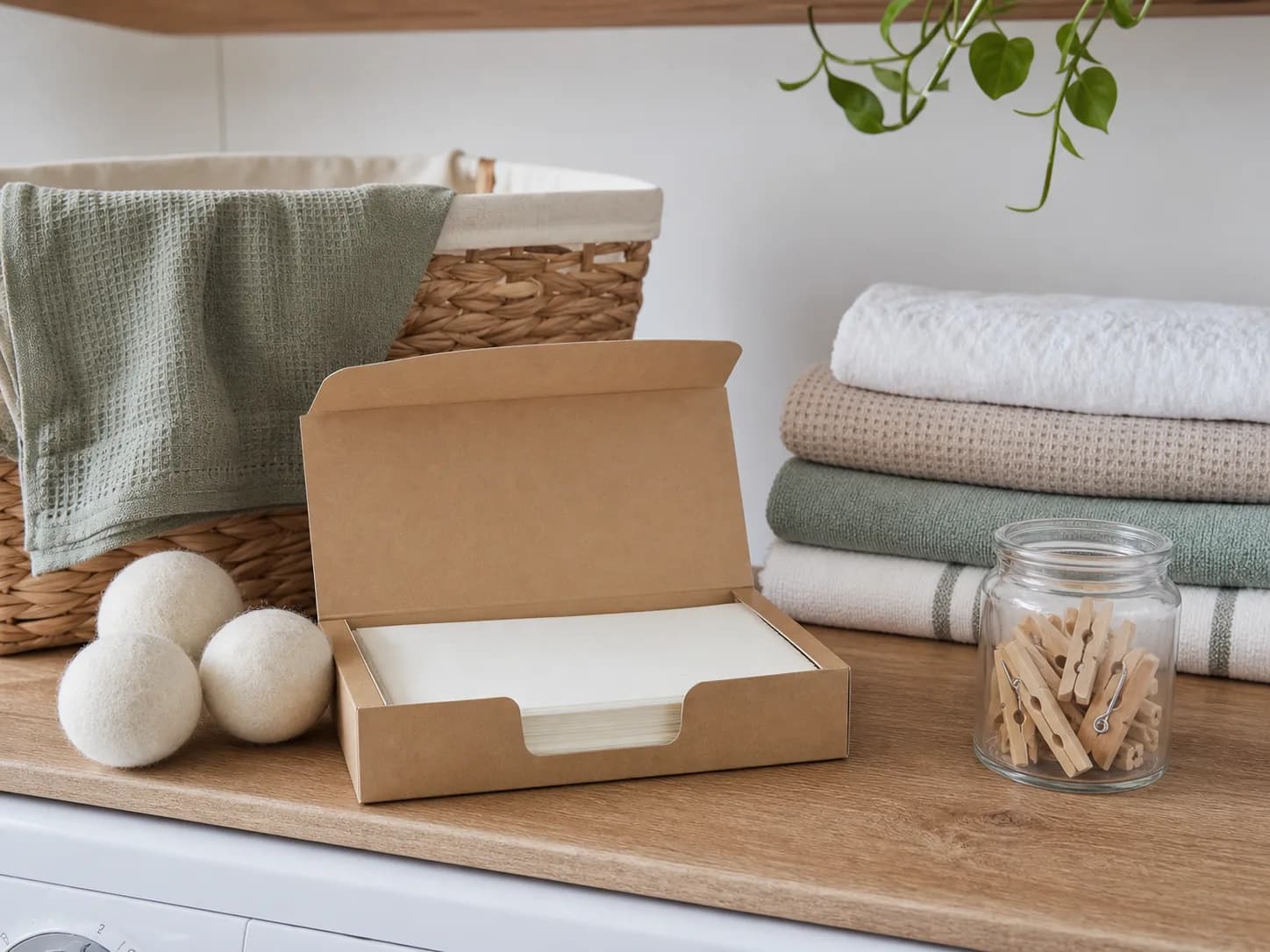
Sheets are useful in small apartments, travel setups, or laundry closets where bulky bottles are annoying. They are also easy for households that want to avoid over-pouring.
The downside is value. If you wash large or heavily soiled loads often, sheets can become an expensive compromise unless performance is clearly good enough for your routine.
3. Why powder deserves a second look
Powder is rarely the sexy option, but it often offers the best combination of low packaging, stable storage, and cost. When paired with a scoop that stays in the box, it becomes a repeatable habit instead of a downgrade.
For many households, powder is the format that quietly lasts because it is boring, affordable, and reliable.
Free printable checklist
Get the zero-waste kitchen starter list.
Includes the 7 swaps worth buying first, a weekly reset routine, and a simple way to avoid buying “eco” clutter.
One checklist, one follow-up email, no spammy sequence. Conversion events are tracked with the checklist_submit GA4 event when analytics is configured.
FAQs
Are laundry sheets always more sustainable?
Not automatically. They save space and reduce bottle waste, but cost-per-load and cleaning performance still matter.
What is the safest low-friction switch?
For most households, a refillable cleaner plus a reliable powder detergent is easier to keep long term than multiple niche swaps at once.