Kitchen guides
Zero-waste kitchen starter kit: the 7 swaps worth buying first
Start with the few swaps that remove the most disposable waste from everyday cooking without turning dinner into a project.
Quick takeaways
- Start with wraps, containers, and dishcloths before buying niche accessories.
- Pick durable materials you can clean fast on a normal weeknight.
- Treat composting as a second-phase habit after food storage feels automatic.
Most low-waste kitchens do not fail because people lack motivation. They fail because the first purchases are too expensive, too aesthetic, or too annoying to maintain after week two.
This starter kit focuses on repeat-use items that solve a real kitchen job: storing leftovers, carrying produce, cleaning counters, and separating food scraps. If a swap does not make one of those routines easier, it does not belong in the first basket.
Related ecokit paths
- Grove Collaborative review (2026): pricing, subscriptions, and alternativesComparison page for pricing, format tradeoffs, and checkout-fit before you click a sponsored link.
- Blueland vs Dropps vs EcoRoots (2026): refill stacks for apartmentsComparison page for pricing, format tradeoffs, and checkout-fit before you click a sponsored link.
- Apartment composting bins: what actually works in a small kitchenClosely related ecokit guide that keeps the topic cluster connected for readers and crawlers.
- Affiliate disclosureMerchant-program status, sponsored link labels, and commission caveats for ecokit recommendations.
Checklist CTA
Kitchen starter checklist
Print the main checklist and pick your first two swaps.
Open checklist landingProduct picks
Recommendations connected to this guide.
Beeswax food wraps
The easiest swap for households still buying plastic wrap every month.
Affiliate link via the live portfolio Amazon tag while dedicated merchant approvals settle.
Open recommendationGlass food storage containers
A zero-fuss upgrade that makes leftovers visible, stackable, and reusable.
Open recommendationSwedish dishcloth starter pack
A high-ROI swap for kitchens that burn through paper towels every week.
Open recommendation1. Buy for routines, not aesthetics
The fastest way to waste money in a low-waste kitchen is to buy an entire matching set on day one. A better approach is to track the disposable products you replace most often and solve those first.
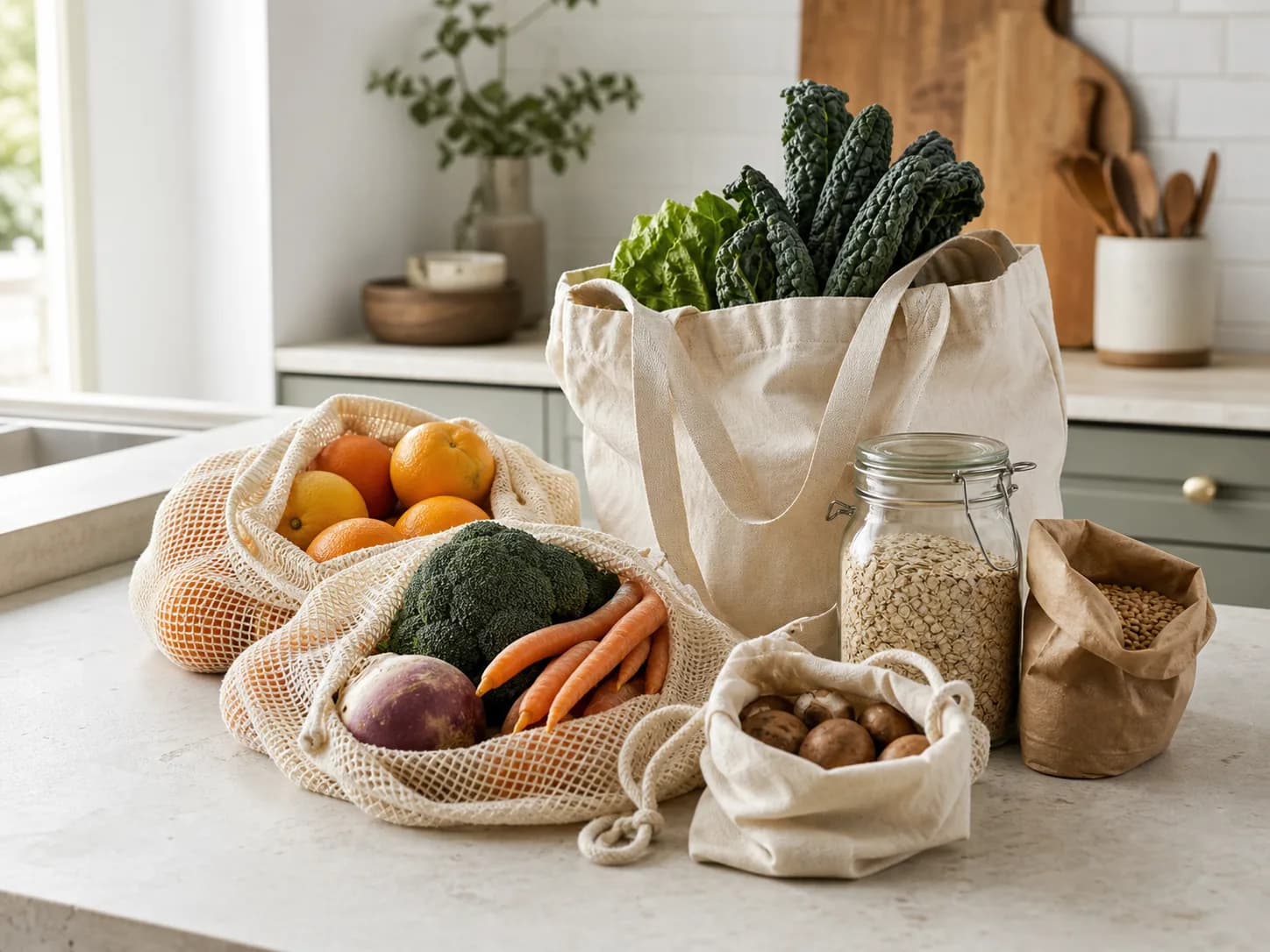
For most homes that means plastic wrap, paper towels, thin produce bags, and food containers that stain or disappear. Those swaps pay for themselves because they remove repeat purchases instead of adding a new hobby.
- Replace one disposable category at a time.
- Keep the new item within arm’s reach of the old habit.
- Choose dishwasher-safe gear whenever possible.
2. The three purchases with the highest payoff
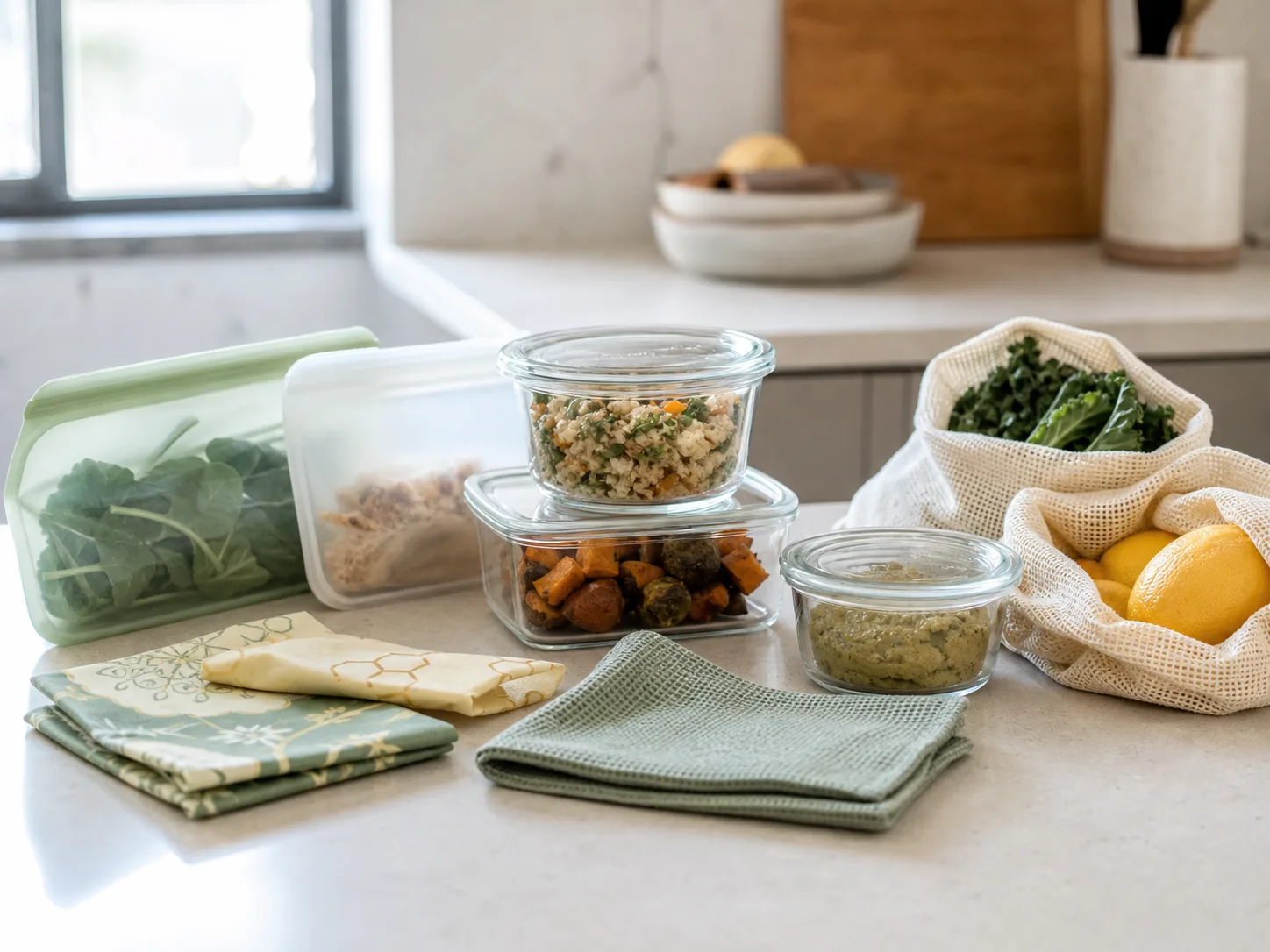
Reusable wraps cover bowls, half-cut vegetables, and lunch prep. Glass containers make leftovers visible enough that people actually eat them. Swedish dishcloths reduce the paper towel reflex because they live on the counter, not in a cupboard.
These are not glamorous upgrades. That is exactly why they work. They fit into the existing kitchen layout and remove daily friction instead of creating new chores.
3. What to delay until month two
Hold off on bulk-jar systems, specialty organizers, or a big compost setup until the first swaps feel natural. Early wins matter more than a perfect setup.
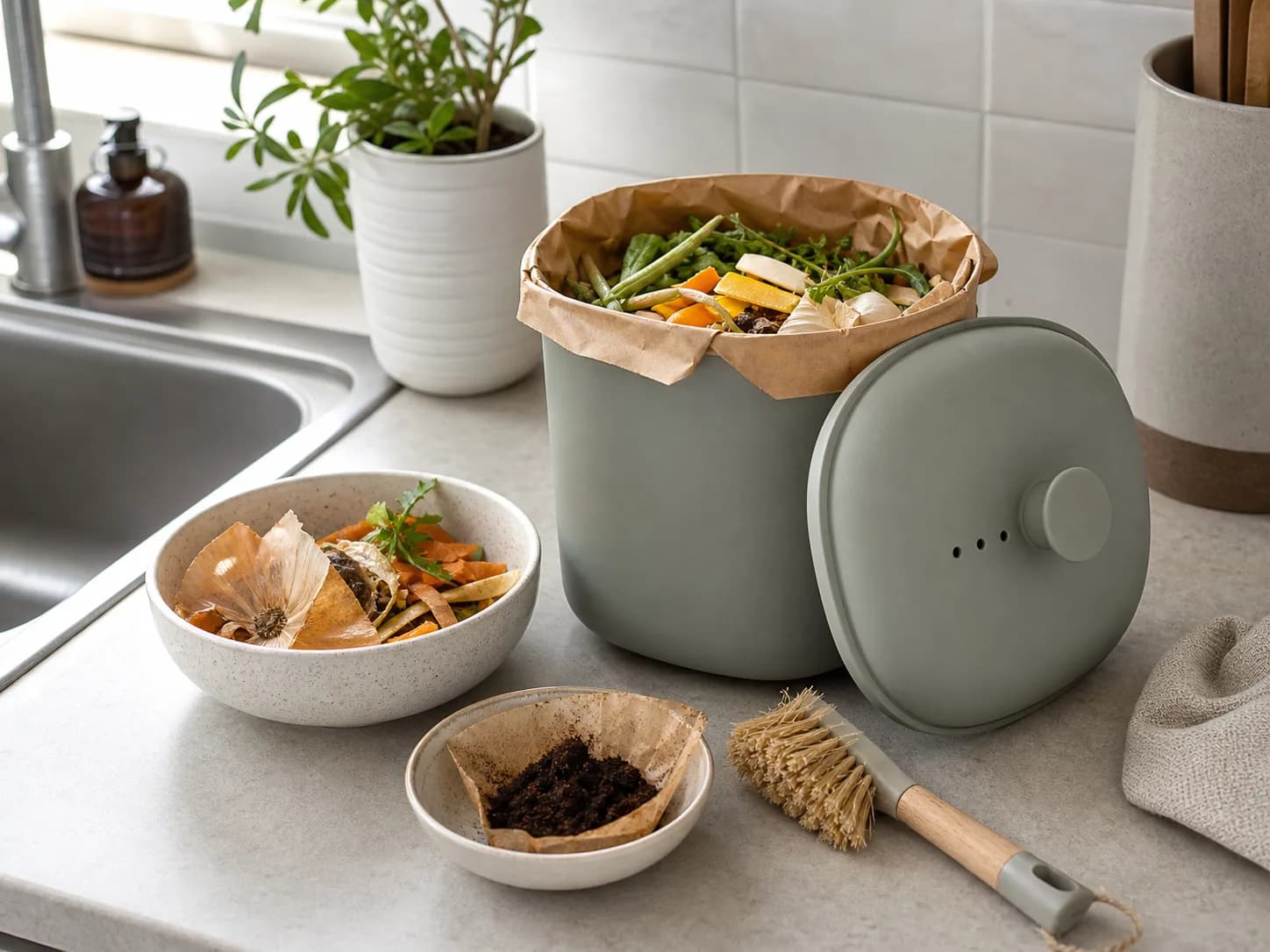
If you want to add one more purchase later, make it a small countertop compost bin. It changes behavior faster than outdoor compost tools because it shortens the distance between prep scraps and the right destination.
Free printable checklist
Get the zero-waste kitchen starter list.
Includes the 7 swaps worth buying first, a weekly reset routine, and a simple way to avoid buying “eco” clutter.
One checklist, one follow-up email, no spammy sequence. Conversion events are tracked with the checklist_submit GA4 event when analytics is configured.
FAQs
What should a beginner skip?
Skip decorative storage systems and matching sets until you know which swaps you will actually use every day.
How many swaps should I start with?
Two or three is enough. The goal is consistency, not a one-week zero-waste sprint.