Bathroom guides
Zero-waste bathroom starter: four swaps that cut plastic without a remodel
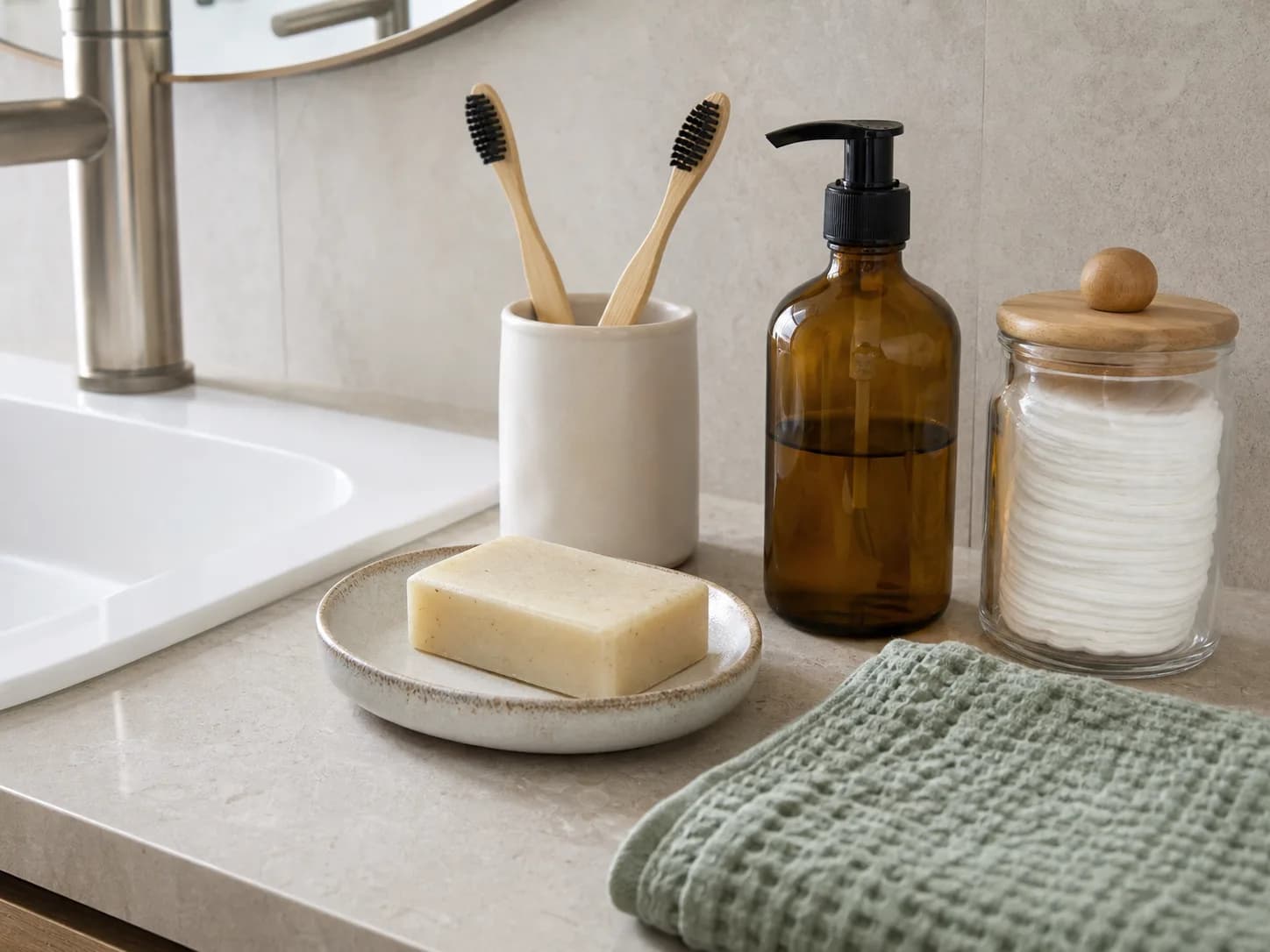
Bathroom waste drops fastest when you replace the products you finish every month — not when you buy a full aesthetic upgrade kit.
Quick takeaways
- Bar soap or one refillable hand wash beats a shelf of half-used pumps.
- Toothbrush and floss swaps matter only if replacements are easy to reorder.
- Skip linen upgrades until daily disposables are under control.
Bathrooms generate a steady stream of small plastic: pump bottles, disposable razors, trial-size clutter, and packaging from products that run out faster than you expect.
The durable approach is to swap one finished product at a time. Kitchen habits usually come first; bathroom changes work best once someone in the home already remembers to refill or rinse gear without nagging.
Related ecokit paths
- Grove Collaborative review (2026): pricing, subscriptions, and alternativesComparison page for pricing, format tradeoffs, and checkout-fit before you click a sponsored link.
- Blueland vs Dropps vs EcoRoots (2026): refill stacks for apartmentsComparison page for pricing, format tradeoffs, and checkout-fit before you click a sponsored link.
- Sustainable home audit: 10 questions before you buy another eco swapChecklist-style page that turns the topic into a concrete two-swap plan.
- Affiliate disclosureMerchant-program status, sponsored link labels, and commission caveats for ecokit recommendations.
Checklist CTA
Bathroom checklist variant
Frame refill and bar-soap trials with the same printable download.
Open checklist landingProduct picks
Recommendations connected to this guide.
Bar soap multipack
Simple shower swap that removes pump bottles from the routine.
Open recommendationRefillable hand soap dispenser
One permanent bottle at the sink beats monthly pump plastic.
Open recommendationBamboo toothbrush pack
Easy reorder habit once soaps and refills are stable.
Open recommendationGrove refillables
Direct merchant shop link for refillable cleaners and home basics.
Open recommendation1. Start with what empties every month
Hand soap and body wash are the highest-frequency finishes in most bathrooms. Consolidate to one refillable pump for hands and consider bar soap for showers if shelf space is tight.
Count how many partial bottles are open right now. If the answer is more than two, consolidation is the real zero-waste win — not another niche accessory.
2. Make refills visible
Store the next refill pouch or concentrate where you notice it before the pump runs dry. Hidden refills mean emergency drugstore runs and more plastic.
Label dilution ratios on refillable bottles. Shared bathrooms fail when only one person knows how to mix concentrate.
- One backup refill per active bottle.
- Rinse pumps weekly to avoid clogging.
- Keep a small drying spot for bar soap so it does not turn to mush.
3. Add toothbrush and floss swaps last
Bamboo toothbrushes and plastic-free floss are useful, but they are not the biggest packaging lever unless you already stabilized soaps and cleaners.
Order replacements on the same schedule as your old disposables so the habit does not depend on remembering a new brand.
Free printable checklist
Get the zero-waste kitchen starter list.
Includes the 7 swaps worth buying first, a weekly reset routine, and a simple way to avoid buying “eco” clutter.
One checklist, one follow-up email, no spammy sequence. Conversion events are tracked with the checklist_submit GA4 event when analytics is configured.
FAQs
Should I do bathroom before kitchen?
Usually no. Kitchen repeat packaging is higher for most homes — use the kitchen checklist first, then mirror the refill habit in the bathroom.
Are bar soaps always lower waste?
Often yes on packaging, but only if the bar dries properly and your household will actually use it instead of buying body wash again.