Kitchen guides
Plastic-free grocery shopping: a weekly routine that survives real carts
Grocery waste drops when bags, containers, and a five-minute prep ritual live next to your keys — not when you memorize a perfect zero-waste store map.
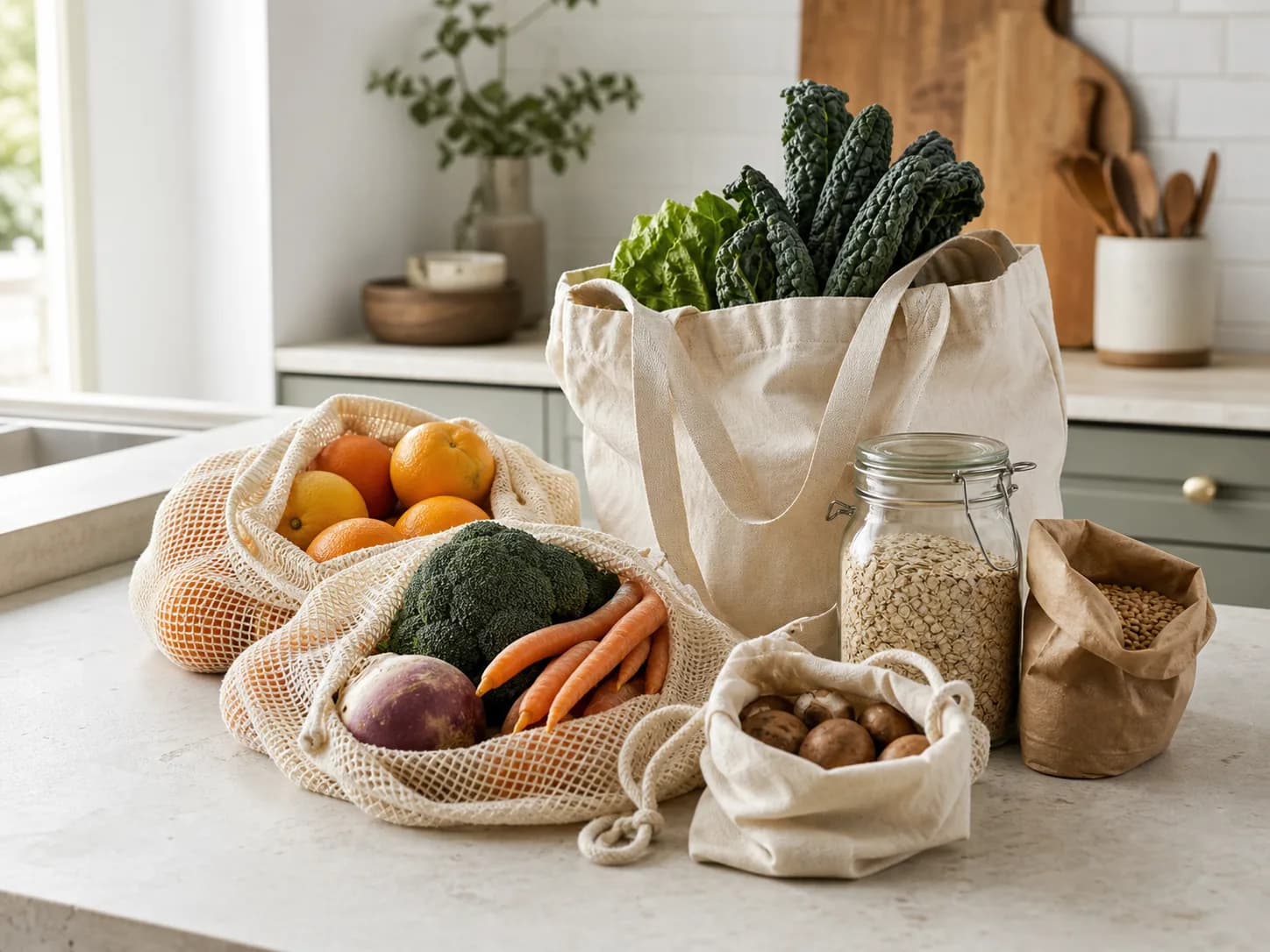
Quick takeaways
- Stage bags and jars where you grab keys or the shopping list.
- Buy the same bulk staples twice before expanding the jar collection.
- Track one packaging win per trip instead of aiming for a perfect cart.
Most plastic-free grocery advice fails because it assumes unlimited time, a co-op on every corner, and a household that meal-preps on Sunday without fail.
A durable routine starts smaller: reusable produce bags in the car or tote, one or two jars for bulk items you already buy, and a default rule for what still gets plastic when you are rushing.
Related ecokit paths
- Blueland vs Dropps vs EcoRoots (2026): refill stacks for apartmentsComparison page for pricing, format tradeoffs, and checkout-fit before you click a sponsored link.
- Grove Collaborative review (2026): pricing, subscriptions, and alternativesComparison page for pricing, format tradeoffs, and checkout-fit before you click a sponsored link.
- Sustainable home audit: 10 questions before you buy another eco swapChecklist-style page that turns the topic into a concrete two-swap plan.
- Affiliate disclosureMerchant-program status, sponsored link labels, and commission caveats for ecokit recommendations.
Checklist CTA
Kitchen starter checklist
Turn grocery bag and produce swaps into two checklist actions this month.
Open checklist landingProduct picks
Recommendations connected to this guide.
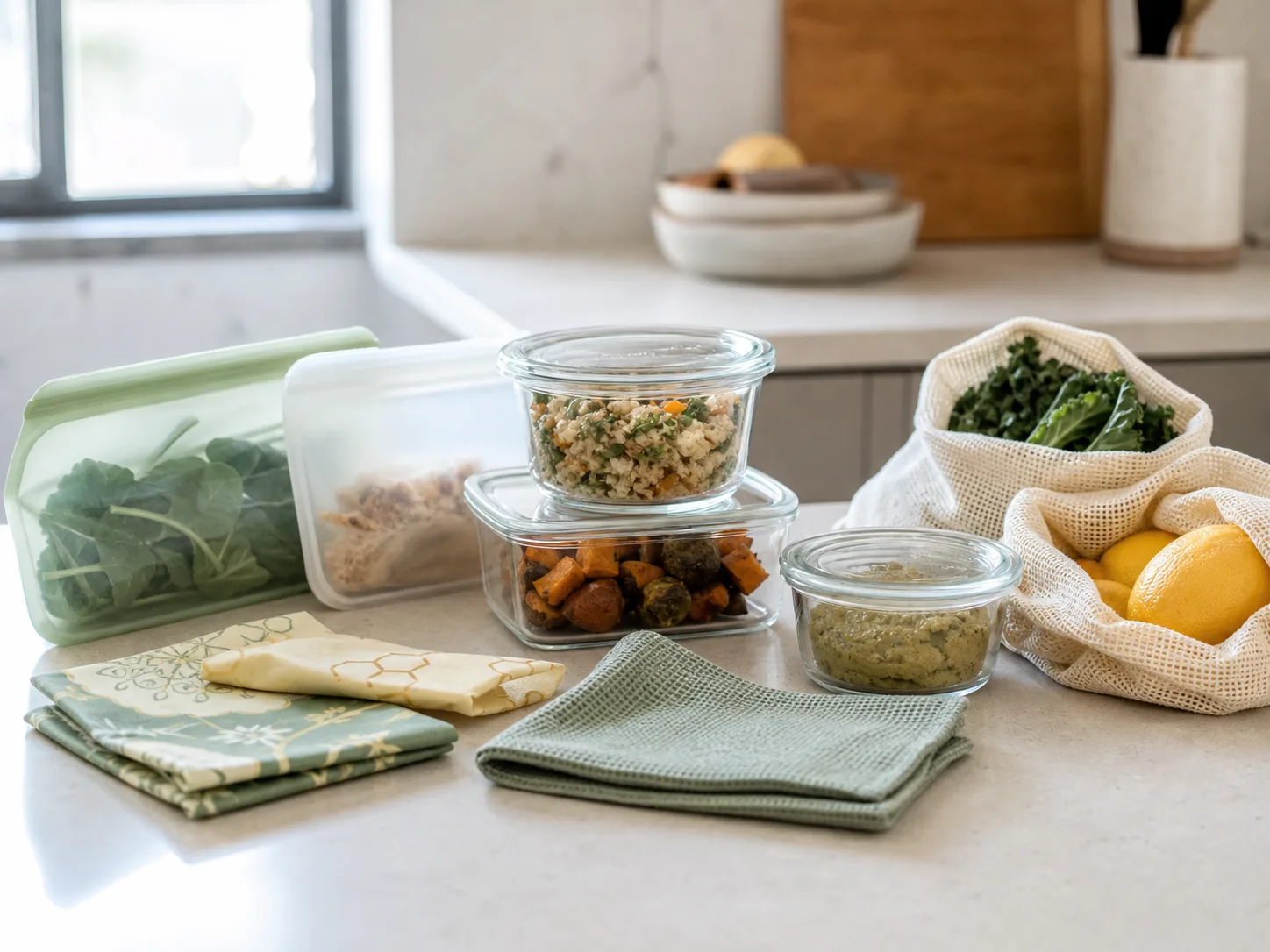
Reusable produce bags
Cuts thin plastic bag waste from weekly grocery runs without changing how you shop.
Open recommendationBeeswax food wraps
The easiest swap for households still buying plastic wrap every month.
Affiliate link via the live portfolio Amazon tag while dedicated merchant approvals settle.
Open recommendationCollapsible grocery crates
Keeps jars upright and reduces extra bags on mixed grocery runs.
Open recommendationZero Waste Store kitchen collection
Direct merchant shop link for wraps, brushes, and reusable kitchen basics.
Open recommendation1. Stage gear where the habit already starts
Produce bags that live in a kitchen drawer rarely make it to the store. Fold a set into your everyday tote, bike bag, or glove box so they survive the walk from parking lot to produce aisle.
If you use jars for bulk, keep only the sizes you actually wash and carry. Two medium jars beat six mismatched containers that never get refilled.
- One tote dedicated to grocery runs.
- Bags clipped inside the tote, not loose at the bottom.
- Jars labeled with tare weight if your store supports bulk.
2. Pick three packaging targets per month
Choose categories you buy every week: leafy greens sleeves, snack clamshells, or bottled drinks. Solve those before attempting a fully unpackaged shop.
When a swap is not available at your store, note the fallback (paper, larger size with less unit packaging, or a different aisle) so rushed trips do not reset the habit.
3. Close the loop at home
Unpacking is where grocery routines win or die. Rinse bags immediately, dry them on a hook, and return them to the tote before the next list is written.
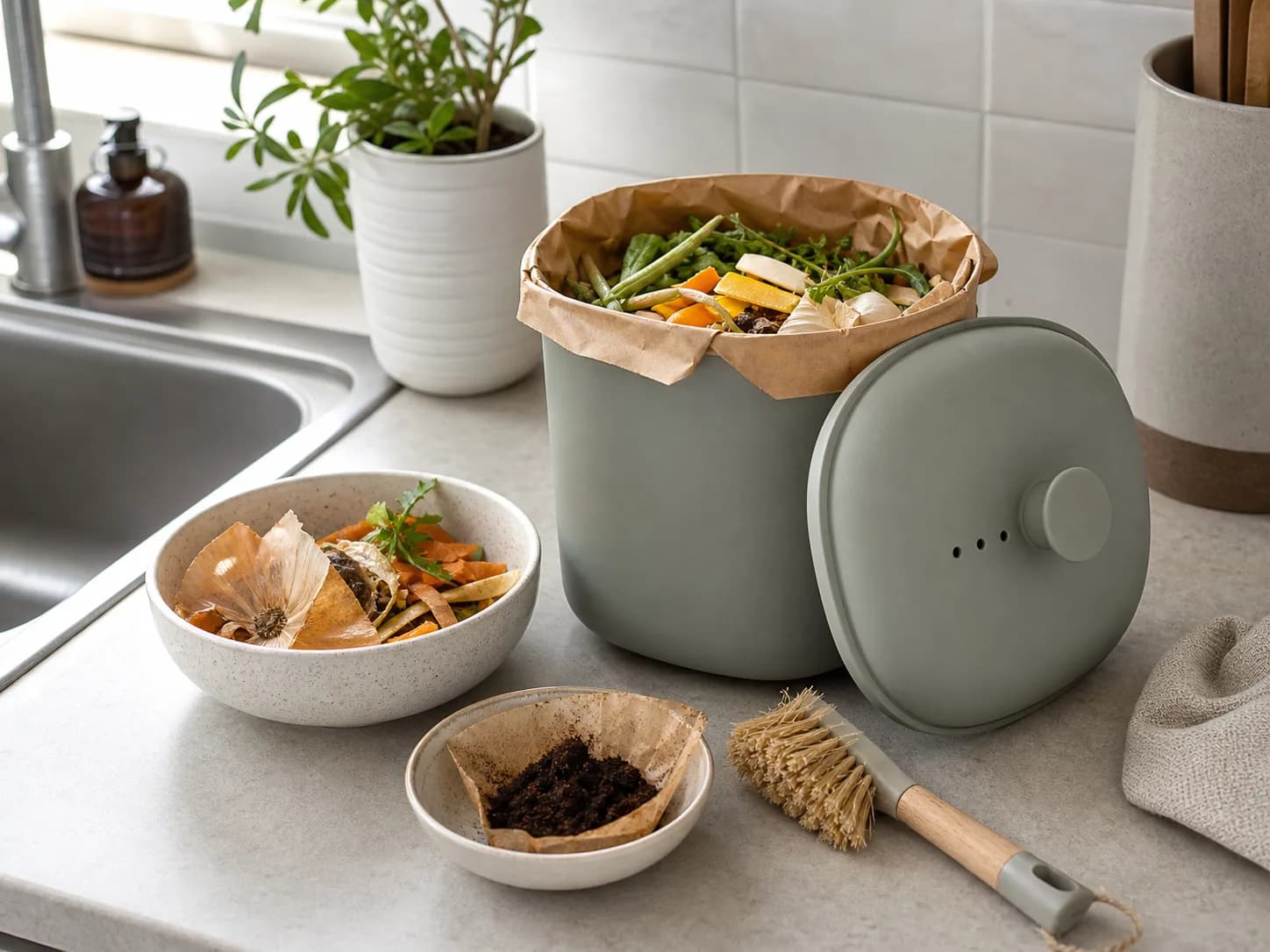
Pair this routine with the kitchen starter checklist so produce storage and compost habits keep pace with what you bring home.
Free printable checklist
Get the zero-waste kitchen starter list.
Includes the 7 swaps worth buying first, a weekly reset routine, and a simple way to avoid buying “eco” clutter.
One checklist, one follow-up email, no spammy sequence. Conversion events are tracked with the checklist_submit GA4 event when analytics is configured.
FAQs
Do I need a zero-waste store to start?
No. Reusable produce bags and fewer single-use bottles at a conventional store already cut visible packaging.
What if my partner will not remember bags?
Keep a spare set in the car and accept that some trips will still use plastic — consistency over months beats one perfect haul.